
You need reliable power, but the world of UPS batteries can be confusing. Is lithium-ion really better, or is it just expensive hype that adds risk to your projects?
Yes, lithium-ion is an excellent choice for modern UPS systems. It offers a much longer lifespan, smaller size, and higher efficiency compared to traditional lead-acid batteries, drastically lowering the total cost of ownership over the system's life.
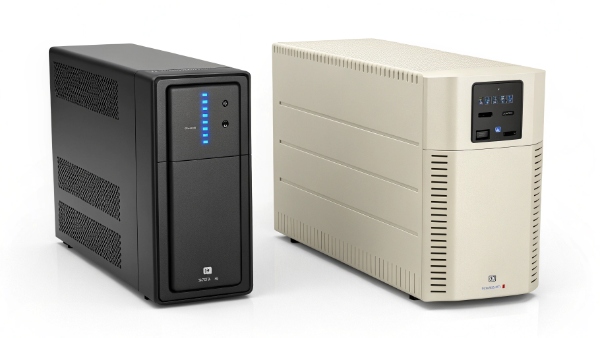
The move to lithium is one of the biggest shifts I've seen in my 10 years in the power industry. But it's important to understand that you can't just drop a lithium battery into any old system. The UPS itself must be designed for it. Let's break down some common questions to see why this technology is a game-changer when done right.
Are There Lithium-Ion UPS?
You see lithium batteries in phones and cars, but you wonder if they are really available for industrial power backup. You might be missing out on a superior solution.
Yes, dedicated lithium-ion UPS systems are widely available and are becoming the new standard. As an OEM/ODM manufacturer, we design and build these systems specifically to leverage the power of lithium battery chemistries for critical applications.

More Than Just a Battery Swap
A true lithium-ion UPS is engineered from the ground up. You can't just take a lead-acid UPS and put lithium batteries in it. As our insight notes, the internal structures are completely different. The most critical difference is the Battery Management System (BMS). This is the intelligent brain of the battery pack that constantly monitors cell voltage, temperature, and state of charge. It ensures every cell works in harmony for maximum safety and lifespan. A lead-acid UPS doesn't have or need this. Furthermore, the charging system is completely different. Lithium batteries require a very specific charging algorithm (CC-CV). Using a lead-acid charger would damage the lithium cells and create a safety risk. Our lithium UPS units have specialized chargers and firmware built-in that communicate with the BMS, ensuring perfect operation.
| Feature | Lead-Acid UPS | Lithium-Ion UPS |
|---|---|---|
| Battery Control | Simple voltage sensing | Advanced Battery Management System (BMS) |
| Charging Method | Multi-stage with float charge | CC-CV (Constant Current/Constant Voltage) |
| Internal Communication | Minimal | Constant data exchange with BMS |
| Design Focus | Simplicity, low initial cost | Performance, safety, long-term TCO |
Are Lithium UPS Safe?
You read news stories about lithium battery fires and worry about installing a large unit in your facility. This makes you question if the technology is truly ready for critical use.
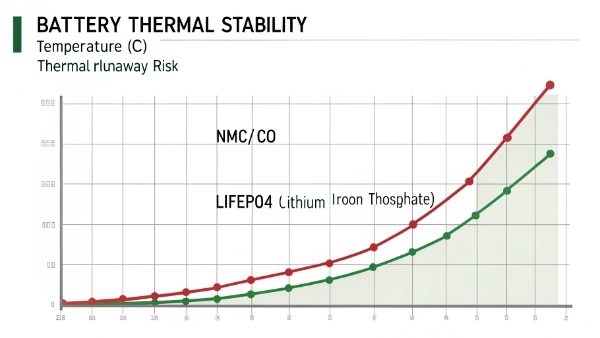
A professionally engineered lithium UPS is incredibly safe, often safer than a lead-acid one. Failures are caused by cheap components and poor design, not the battery chemistry itself, especially when using stable chemistries like LiFePO4.
Safety by Design
Safety is our number one priority. The key is using the right chemistry and a robust BMS. Many consumer devices use chemistries like NMC for high energy density, but for industrial UPS systems, we use Lithium Iron Phosphate (LiFePO4). This chemistry is chemically far more stable and is not prone to thermal runaway like other types. I’ve seen tests where LiFePO4 cells were punctured and they just smoked a little; they didn’t catch fire. The other half of the safety equation is the BMS I mentioned earlier. It acts as a vigilant guard. It prevents overcharging, over-discharging, and overheating—the three main causes of battery failure. It's also important to remember the risks of older technology. Lead-acid batteries can leak corrosive sulfuric acid and produce explosive hydrogen gas during charging. A sealed lithium UPS has none of these issues.
| Safety Aspect | Lead-Acid Battery | LiFePO4 Lithium Battery |
|---|---|---|
| Thermal Runaway Risk | Low | Extremely Low |
| Chemical Hazard | Sulfuric Acid Leak | None (sealed cells) |
| Gas Production | Explosive Hydrogen Gas | None during normal operation |
| Primary Safety System | Venting caps, proper room ventilation | Integrated electronic BMS |
How Long Does a Lithium UPS Battery Last?
You are tired of the constant cycle of replacing heavy lead-acid batteries every few years. The cost and labor are a huge drain on your operational budget and maintenance teams.
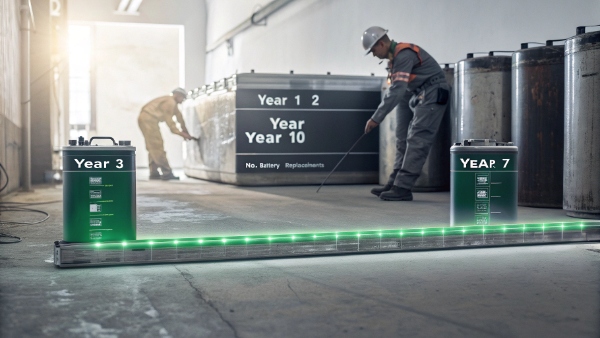
A lithium UPS battery typically lasts 8 to 15 years, which is two to three times longer than a lead-acid battery. This dramatically reduces your total cost of ownership and maintenance headaches.
Calculating the True Cost (TCO)
When clients ask me about the higher initial price of lithium, I always turn the conversation to Total Cost of Ownership (TCO). A lead-acid battery might last 3-5 years. Over a 10-year period, you will replace it at least twice. That means buying three sets of batteries in total, plus paying for the labor to remove the old, heavy batteries and install the new ones each time. Lithium batteries, on the other hand, are designed to last the entire life of the UPS, typically 10 years or more. You buy it once. Furthermore, lithium batteries are more efficient and can operate at higher temperatures, which can even reduce your cooling costs in a data center. When you add up all the costs over a decade, the lithium solution is almost always cheaper.
| Cost Factor (10-Year Period) | Lead-Acid UPS | Lithium-Ion UPS |
|---|---|---|
| Initial Purchase Price | Lower | Higher |
| Battery Replacements | 2-3 times | 0 times |
| Replacement Labor Cost | High | None |
| Cooling/Energy Cost | Higher | Lower |
| Total 10-Year Cost | Much Higher | Much Lower |
Does a UPS Allow Lithium Batteries?
You have an existing lead-acid UPS and wonder if you can just buy some lithium batteries to upgrade it. This seems like an easy way to get the benefits of new technology.
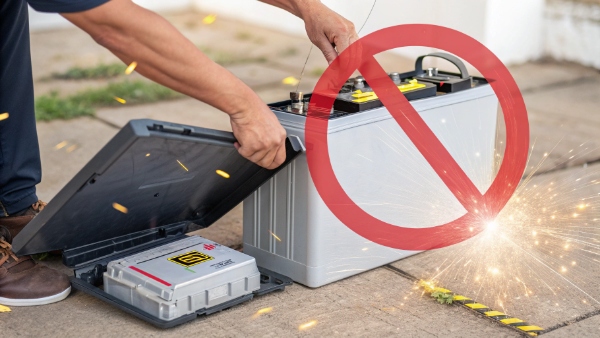
No, you cannot put lithium batteries in a UPS designed for lead-acid. The charging systems, safety controls, and internal firmware are completely incompatible. You must use a purpose-built lithium UPS system.
Why a Direct Swap is Dangerous
I have to be very clear about this, as it’s a question I get from system integrators who are trying to be resourceful. Trying to "upgrade" a lead-acid UPS1 with lithium batteries is a recipe for disaster. The number one reason is the charging method. A lead-acid UPS uses a "float charge," which keeps a constant low-level charge on the battery. This would destroy a lithium battery by constantly overcharging it. A proper lithium UPS uses a specific charging profile and cuts power completely when the battery is full. Secondly, a lead-acid UPS has no way to talk to the battery's BMS. It would be flying blind, unable to monitor cell health or temperature. It’s like putting a modern car engine in a vintage car frame without upgrading the brakes, fuel line, or computer. It simply won't work, and it's incredibly dangerous.
| System | Lead-Acid Charger | Lithium Charger |
|---|---|---|
| Full Charge Behavior | Applies a constant "float charge" | Stops charging completely |
| Safety Monitoring | Basic voltage check | Communicates with BMS for cell data |
| Compatibility | Only for lead-acid batteries | Only for lithium batteries2 |
Conclusion
Lithium-ion is a superior choice for modern UPS systems, offering a longer life, enhanced safety, and lower TCO. However, you must use a complete UPS system specifically designed for this technology.