
Your industry has unique power protection needs. A generic, one-size-fits-all UPS is a risky compromise that could lead to catastrophic failure when you can least afford it.
Any industry where downtime is expensive benefits, but healthcare, finance, data centers, and manufacturing see the most value. We provide tailored UPS solutions for these critical sectors, ensuring their specific operational needs are met, not just approximated.
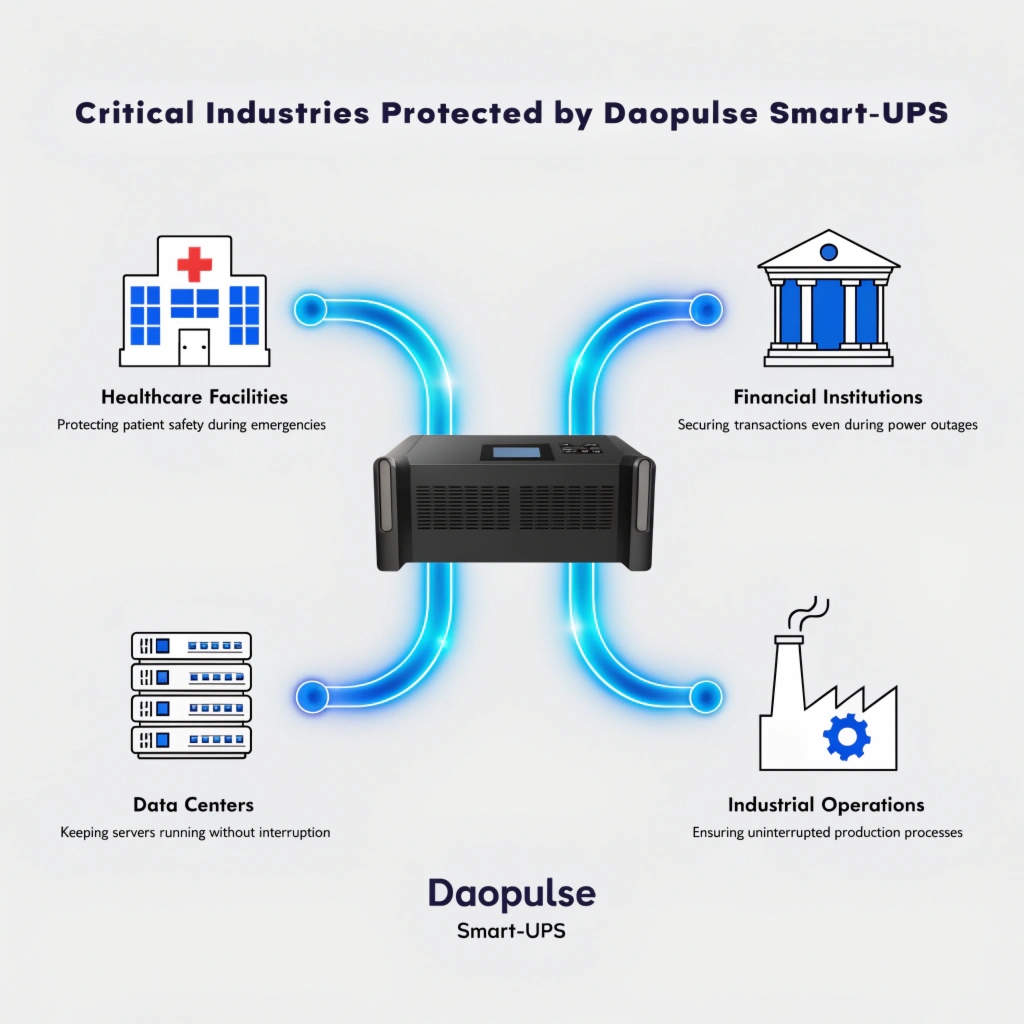
I've spent my career working with partners across many fields. While the main goal is always the same—achieving 100% uptime—the specific risks and requirements are vastly different. A bank processing financial transactions has zero tolerance for data corruption from a power flicker. A hospital operating room cannot have its lights go out for even a second. As an OEM/ODM manufacturer, we don't just sell boxes; we build partnerships to understand these unique challenges and engineer solutions that provide total peace of mind.
How much downtime can Smart-UPS systems prevent during power outages?
You know even a brief power flicker can halt a production line or corrupt a critical database. You cannot afford any downtime, but you wonder how much a UPS can realistically prevent.
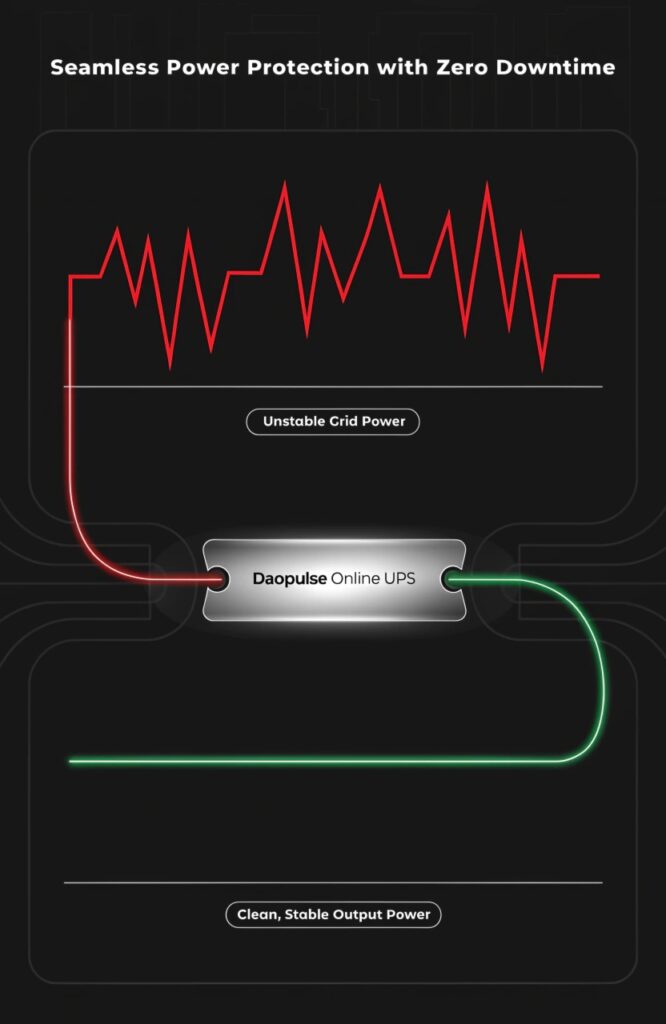
A correctly specified online Smart-UPS prevents 100% of downtime from power events. Our systems provide instantaneous, seamless power from batteries, making sags, surges, and blackouts completely invisible to your equipment. The switchover time is zero.
The Power of Online Double-Conversion
When a procurement manager asks me this, I explain that not all UPS systems are created equal. The technology that makes zero downtime possible is called "online double-conversion." Think of our UPS as a personal, dedicated power station for your most important systems. It constantly takes incoming utility power, converts it to clean DC power to charge its batteries, and then rebuilds a brand new, perfect AC sine wave to send to your equipment. Your load is never directly connected to the unstable grid.
Because your equipment is always running on this regenerated power, there is no "switchover" when a blackout occurs. The UPS simply continues drawing from its batteries instead of the wall. To your servers, medical devices, or control systems, the event never happened. I worked with a system integrator on a banking project where transaction integrity was everything. We built a customized UPS with enough battery runtime to get them through common outages, ensuring no transaction was ever lost. This level of absolute protection is what "online" technology delivers.
| UPS Type | Switchover Time | Protection Level | Best For |
|---|---|---|---|
| Standby (Offline) | 4-10 milliseconds | Basic | PCs, non-critical devices |
| Line-Interactive | 2-4 milliseconds | Good | Small servers, network gear |
| Daopulse Online | 0 milliseconds | Total | Data Centers, Hospitals, Finance |
How do Smart-UPS models optimize energy usage for data centers?
Your data center's electricity bill is a huge operational cost. The very UPS units you installed for protection are now a significant part of that energy consumption problem, burning money and power.
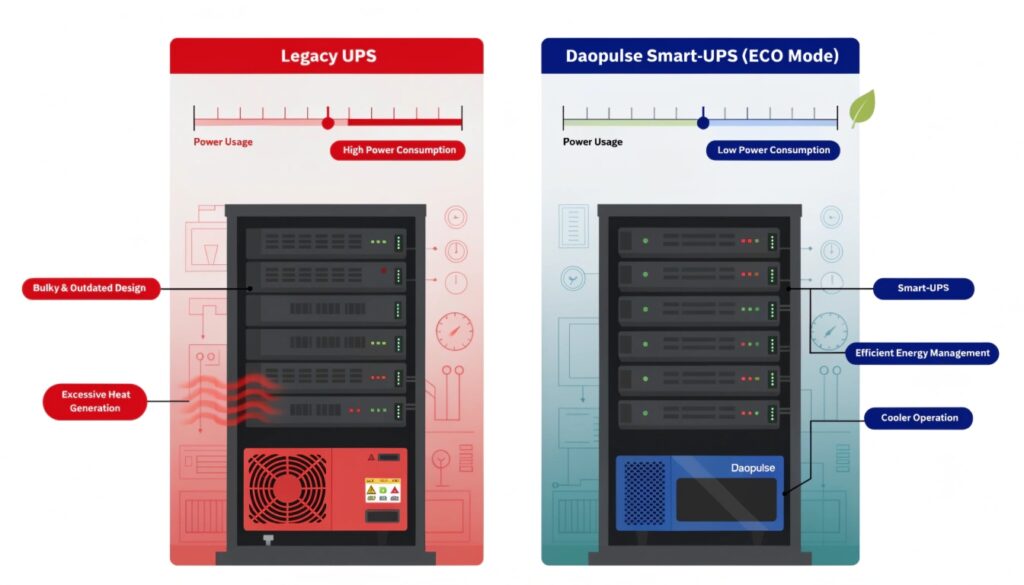
Our Smart-UPS models use an intelligent high-efficiency ECO mode that can reach 99% efficiency. This drastically cuts energy waste, directly lowering your data center's power and cooling costs, which improves your Power Usage Effectiveness (PUE).
Efficiency Without Compromise
For years, data center managers faced a tough choice: get the best protection from an online UPS and accept a high electricity bill, or save energy with a less protective model. We engineered our Smart-UPS systems to eliminate this compromise. The key is our advanced ECO Mode. When the UPS detects that the incoming utility power is stable and within tight specifications, it allows that power to pass directly to the equipment, bypassing the main power conversion components. This process is incredibly efficient, often reaching 99%.
But it's also intelligent. The UPS continuously monitors the power quality. The instant it detects a problem—a sag, spike, or flicker—it switches back to full online double-conversion mode in less than two milliseconds. Your equipment is always protected. For a data center, this has a massive impact. Less wasted energy means a smaller electricity bill. And because the UPS runs cooler, you spend less on air conditioning. I recently helped a client configure the ECO mode settings on a fleet of our UPS units, and they projected a 15% reduction in their overall UPS-related energy costs.
What is the lifecycle and replaceability of batteries in Smart-UPS?
UPS batteries are a major long-term expense. You are rightly concerned about the hidden costs and operational headaches of frequent battery replacements across your entire facility.
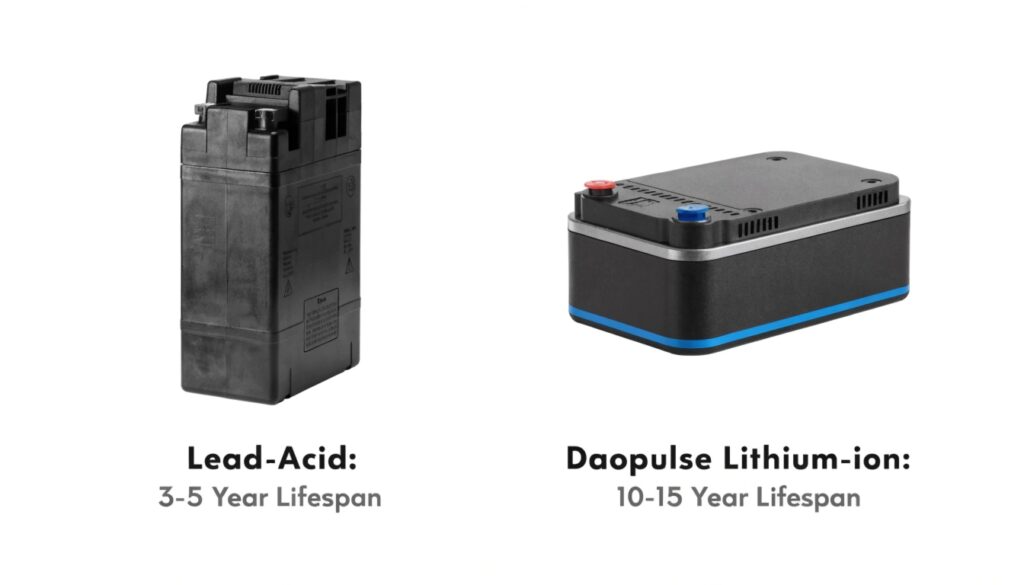
Our standard lead-acid batteries have a 3-5 year lifecycle. For superior performance, our lithium-ion options last 10-15 years. Both types are designed to be user-replaceable, often hot-swappable, to simplify maintenance and eliminate downtime.
Designing for a Lower Total Cost of Ownership
The battery is the heart of any UPS, and we focus heavily on its longevity and serviceability. We offer two main chemistries to fit different needs and budgets. Our high-quality Valve-Regulated Lead-Acid (VRLA) batteries are the industry standard, offering a reliable 3-5 year service life in normal conditions. They are a cost-effective choice for many applications.
For projects demanding longer life and better performance, we are experts in lithium-ion UPS solutions. While the initial investment is higher, a lithium battery can last 10 years or more, 2-3 times longer than lead-acid. They are also lighter and perform better in warmer environments, which can reduce cooling costs. As an OEM partner, we can go even further. For a client deploying equipment in a remote location, we designed a system with oversized lithium batteries and custom firmware to maximize runtime and push the replacement cycle out to over a decade. This customization significantly reduced their long-term maintenance costs and is a key part of our value.
| Battery Type | Typical Lifespan | Key Advantage | Best For |
|---|---|---|---|
| Lead-Acid (VRLA) | 3-5 Years | Cost-Effective & Reliable | Standard enterprise applications |
| Lithium-Ion (LiFePO4) | 10-15 Years | Long Life & High Efficiency | Critical long-term projects, high TCO focus |
How do you replace batteries in Daopulse Smart-UPS units?
Your critical systems cannot be shut down for maintenance. The idea of taking the entire UPS offline just to swap out a battery is a non-starter and a major operational risk.
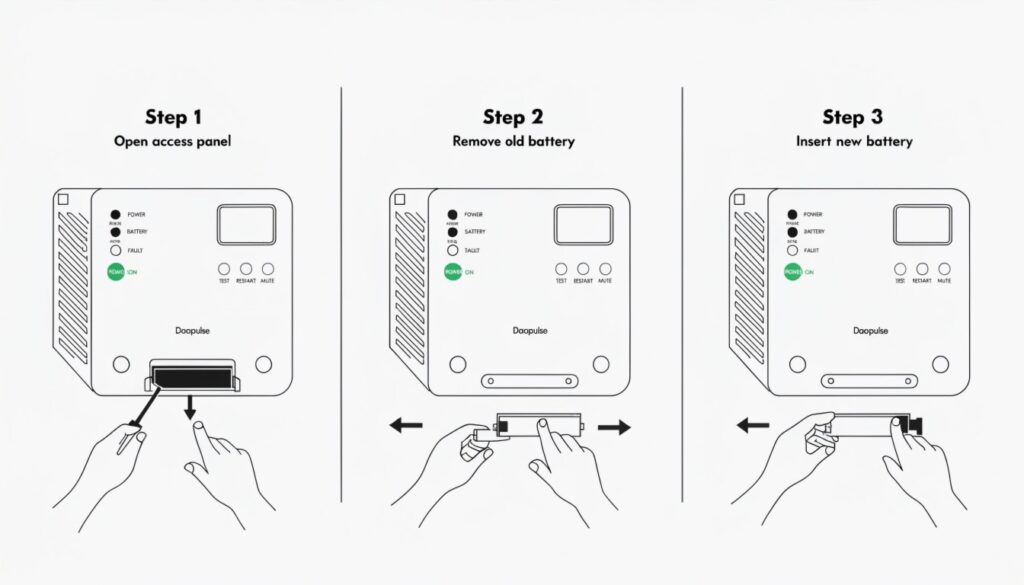
Most of our Smart-UPS systems feature user-replaceable, hot-swappable battery modules. You can safely replace the batteries while the UPS continues to power and protect your equipment. No downtime is needed for this routine maintenance task.
Maintenance That Keeps You Online
We design our products from the perspective of the people who use them. We know that scheduled downtime is still downtime. That’s why hot-swappable batteries are a standard feature on most of our enterprise models. The process is straightforward and designed to be performed safely by on-site staff without specialized electrical knowledge.
Typically, it involves removing a front bezel, disconnecting a simple, safe connector, and sliding the old battery cartridge out. You then slide the new, pre-assembled cartridge in, reconnect it, and replace the bezel. The whole process takes only a few minutes. During this time, the UPS continues to run on AC power, fully protecting your connected equipment. As an OEM/ODM partner, we even customize this process. I remember a client who had extremely dense server racks with no front access. We engineered a custom UPS chassis for them with rear-accessible, hot-swappable battery trays. This ability to tailor even the physical maintenance process to a partner's specific environment is something you simply cannot get from an off-the-shelf brand.
Conclusion
From healthcare to data centers, industries with zero tolerance for failure benefit most from a true UPS partnership. Our tailored solutions prevent downtime, optimize energy, and simplify maintenance for any critical application.