
Worried about unpredictable UPS costs? Budgeting for power protection can be confusing, with prices ranging wildly for seemingly similar products.
A UPS can cost from under $100 for a desktop unit to over $100,000 for a data center system. The price is driven by power capacity (VA/Watts), required runtime (battery size), and technology (online vs. offline).
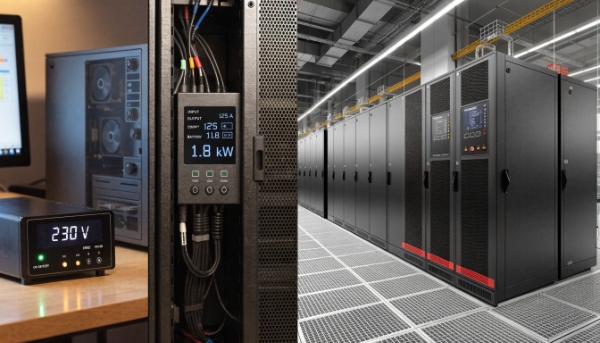
As a UPS manufacturer for over a decade, I've helped countless procurement managers navigate this question. The sticker price is just the start. The real value of a UPS is tied to what it protects. A cheap unit for a multi-million dollar server is a recipe for disaster. The right question isn't just about the cost of the UPS, but the cost of not having the right one. Let's break down the factors that determine the true price of power security.
Can a UPS Last for 8 Hours?
You need long-term power for a critical process, but standard UPS runtimes are just minutes. An extended outage could be disastrous for your operations and there's no one there to shut things down.
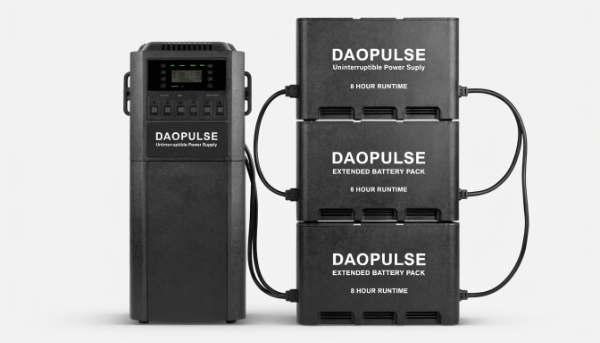
Yes, a UPS system can last for 8 hours or even longer. This requires a specifically designed solution with external battery packs (EBPs). Standard off-the-shelf units are only designed for safe shutdown, not for running through long outages.
Designing for Runtime
A standard UPS you buy off the shelf usually provides about 5-15 minutes of power. This is just enough time for servers to perform an automated, graceful shutdown. It prevents data corruption, but it doesn't keep you online. When clients like system integrators for remote facilities or monitoring stations come to me, they need to bridge gaps of many hours. For them, we design a system. We start with a powerful UPS unit, often with an upgraded charger. Then we add External Battery Modules (EBMs) or entire battery cabinets. It's like adding extra fuel tanks to a truck. More batteries mean more runtime. The key is to correctly size the system. We calculate the total load in Watts and then determine the battery Amp-hour (Ah) capacity needed to sustain that load for 8 hours. We also have to consider the choice between traditional Lead-Acid and modern Lithium-ion batteries, which offer longer life and a smaller footprint for the same runtime.
How Much Does It Cost to Install a UPS?
You've budgeted for the UPS unit, but now you're hit with unexpected, high installation fees. These hidden costs can blow your project budget and delay deployment.
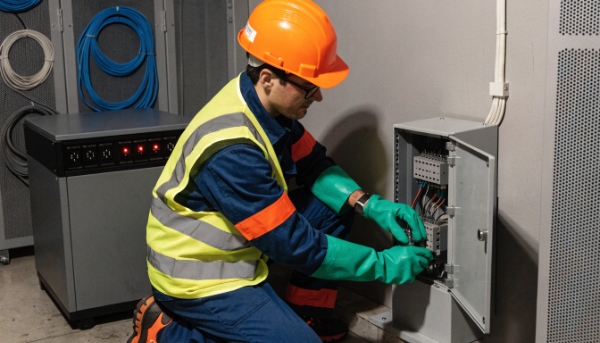
Installation costs vary from zero for small plug-in units to thousands of dollars for large, hardwired systems. A licensed electrician is required for any system that is not a simple plug-and-play model, and this is the main cost factor.
From Plug-and-Play to Major Project
The cost of installation depends entirely on the size of the UPS. I've seen clients get this wrong, so it's important to be clear. We can break it down into three main categories. First, you have the small, desktop or under-desk units, typically under 3,000VA. These are plug-and-play. You just plug them into the wall and plug your equipment into them. The installation cost is zero. Second, you have mid-range, single-phase systems (3kVA-20kVA). These must be hardwired by a qualified electrician to ensure safety and code compliance. This might involve running a new, dedicated circuit from your breaker panel. The cost here can be a few hundred to a couple of thousand dollars. Finally, you have the large three-phase systems for data centers or industrial use. This is a real construction project. It involves specialized electrical contractors, permits, and the installation of large bypass switchgear. The installation cost can be a significant portion of the total project budget.
| UPS Size (VA) | Installation Type | Typical Cost |
|---|---|---|
| < 3,000 VA | Plug-and-Play | $0 |
| 3,000 - 20,000 VA | Hardwired (Single-Phase) | $300 - $2,500 |
| > 20,000 VA | Hardwired (Three-Phase) | $2,000 - $20,000+ |
Is a UPS Really Worth It?
A UPS seems like an expensive insurance policy you might never use. With tight budgets, it is tempting to cut this "non-essential" expense and just hope for the best.
Yes, a UPS is absolutely worth it. The cost of a single power event—in downtime, data loss, or equipment damage—almost always exceeds the cost of a proper UPS system. It's not just for blackouts.
More Than Just a Battery
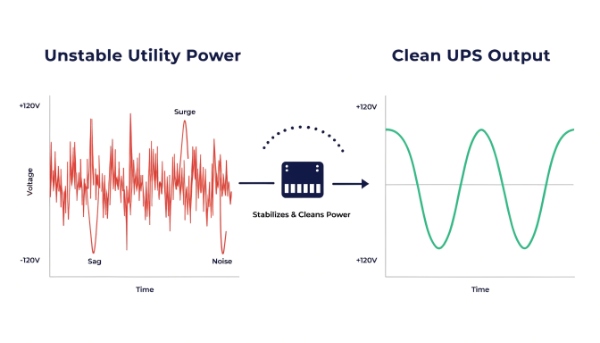
My insight from years in this field is that most people misunderstand what a UPS does. They think it's just a backup battery for blackouts. But total blackouts are the least common power problem. The real value of a good UPS comes from the other functions it performs every second of the day. As my customer's insight noted, it provides crucial voltage regulation1. The power from your wall outlet is unstable. It has small sags (brownouts) and surges (spikes) all the time. These events slowly destroy the sensitive components in your electronics, causing premature failure. A line-interactive UPS smooths these out. An online UPS goes even further, acting as a complete electrical firewall. It takes the "dirty" utility power and rebuilds a new, perfect, stable power signal for your equipment. This constant protection is what makes a UPS so valuable. The cost of replacing a server motherboard or a medical device's control board is far greater than the cost of the UPS that would have protected it.
| Risk without UPS | Cost of the Risk | UPS Solution |
|---|---|---|
| Data Corruption during a Brownout | Hours of lost work, data recovery fees | Voltage Regulation (AVR) |
| Server Damage from a Surge | $1,000s in hardware replacement | Surge Protection |
| Total Downtime during a Blackout | Lost revenue, customer trust | Battery Backup |
| Premature Equipment Failure | Constant replacement cycles | Power Conditioning |
Conclusion
A UPS is a critical investment in stability. The right system prevents costly downtime and equipment damage, safeguarding your operations and providing real peace of mind.
-
Understanding voltage regulation can help you appreciate how UPS systems protect your electronics from damage. ↩