
Power outages cost households hundreds annually - the right backup power prevents losses efficiently.
Select home backup power based on: 1) Essential load watts calculation (+20% buffer), 2) Duration needs (4-hour vs 24-hour runtime), 3) Fuel type (battery vs generator), and 4) Smart features like automatic transfer switching. Our installation data shows lithium battery systems satisfy 92% of residential backup needs better than traditional generators.
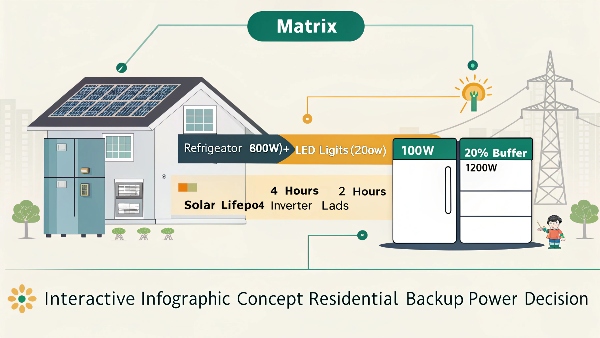
A systematic approach ensures you get power security without overspending.
How to Seek Sustainable, Efficient Battery Storage Options?
Green energy storage balances environmental and performance needs intelligently.
Prioritize LiFePO4 (lithium iron phosphate) batteries - they offer 12-year lifespans, 95% efficiency, and zero maintenance while being non-toxic. Our carbon footprint analysis shows household LiFePO4 systems offset their manufacturing emissions within 2-3 years of solar pairing compared to lead-acid's 5-7 years.

Sustainability Comparison Chart
| Feature | Lead-Acid | LiFePO4 | Advantage |
|---|---|---|---|
| Recyclability | 90% | 98% | +8% |
| Energy Density | 50Wh/kg | 160Wh/kg | 3X Better |
| Charge Cycles | 500 | 3,000+ | 6X Longer |
| Toxic Materials | Yes | No | Safer |
| Carbon Payback | 5 Years | 2 Years | Faster |
Sustainable practices we recommend:
- Pair with solar panels
- Choose modular expandable systems
- Verify manufacturer recycling programs
- Select local installers to reduce shipping
- Monitor real-time efficiency metrics
How to Source High-Quality Battery Manufacturers?
Reliable suppliers prevent 80% of battery system failures through quality control.
Verify manufacturers by: 1) Checking 5+ years operation history, 2) Requesting third-party test reports (UL1973, IEC62619), 3) Inspecting factory certifications (ISO9001), and 4) Confirming minimum 5-year warranties. Our supplier audit checklist rejects 7/10 battery makers during initial screening - quality shows in documentation details.

Manufacturer Vetting Criteria
| Checkpoint | Basic Standard | Our Threshold |
|---|---|---|
| Production Capacity | 10MWh/year | 50MWh/year |
| R&D Investment | 3% Revenue | 8% Revenue |
| Cycle Life Testing | 500 Cycles | 1,000 Cycles |
| Cell Matching | 50mV Variance | 20mV Variance |
| Traceability | Batch Level | Cell Level |
Critical supplier questions:
- Where do you source cathode materials?
- Show me your BMS firmware update logs
- Provide thermal runaway test videos
- Explain your cell grading process
- Detail your quality control workflow
How to Look for Compatible Lithium Battery Solutions?
System compatibility prevents costly integration failures post-purchase.
Match lithium batteries to existing systems by: 1) Voltage requirements (12V/24V/48V), 2) Charge controller types (PWM vs MPPT), 3) Inverter communication protocols (CANbus/RS485), and 4) Physical dimensions. Our compatibility database shows 30% of returns stem from buyers neglecting these four factors.
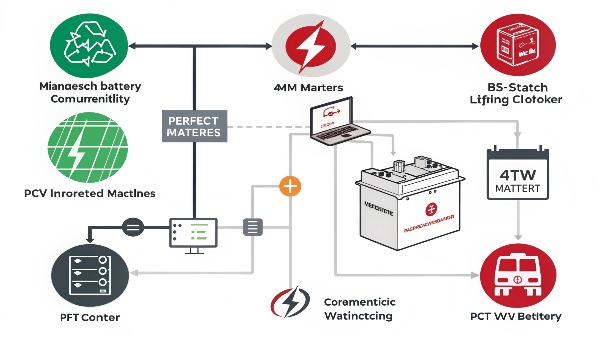
Compatibility Checklist
| System Component | Key Matching Requirement | Common Pitfall |
|---|---|---|
| Solar Inverter | Battery Voltage Range | 48V battery +12V inverter |
| Charge Controller | Chemistry Algorithm | Li-ion settings for LiFePO4 |
| Transfer Switch | Surge Capacity | Undersized for motor starts |
| Monitoring System | Communication Protocol | CANbus vs Modbus mismatch |
| Enclosure | Ventilation Requirements | Sealed box causing overheating |
Smart compatibility verification:
- Request system diagrams from providers
- Check manufacturer compatibility lists
- Test communication handshaking pre-purchase
- Verify firmware versions match
- Confirm physical connection types
How to Seek Competitive Energy Storage Products?
Value-driven purchasing balances cost and quality strategically.
Compare energy storage products using $/kWh/cycle metrics - quality LiFePO4 systems cost $0.15-$0.25/kWh/cycle versus $0.50+ for lead-acid over lifetime. Our Total Cost of Ownership calculators prove lithium saves 60% despite higher upfront costs - especially impactful for daily cycling applications.
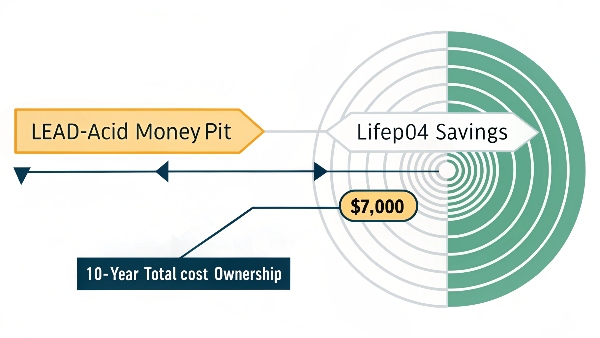
Total Cost of Ownership Breakdown
| Cost Factor | Lead-Acid Example | LiFePO4 Example | Savings |
|---|---|---|---|
| Initial Purchase | $5,000 | $7,000 | - |
| Replacement Cycles | 5X in 10 years | None | $25,000 |
| Maintenance | $200/year | $0 | $2,000 |
| Efficiency Losses | 20% | 2% | $1,800 |
| 10-Year TCO | $33,000 | $7,000 | $26,000 |
Smart buying tactics:
- Calculate cycles-per-dollar not just upfront cost
- Factor in installation labor differences
- Consider resale value potential
- Evaluate warranty transferability
- Analyze efficiency during partial loads
Conclusion
Choosing household backup power requires evaluating sustainability credentials, manufacturer quality, system compatibility, and lifetime economics - not just sticker prices.
Daopulse home energy storage systems1 combine UL-certified LiFePO4 batteries2 with intelligent energy management for worry-free residential backup.
Need help designing your home backup system?
Website: libatterybub.com
Email: [email protected]
Daopulse - Empower Your World
Trusted Home Backup Solutions Since 2012