
Power disruptions can cause major problems, yet many still operate without proper protection. The right UPS system prevents damage and downtime efficiently.
When buying a UPS, determine your power needs first - calculate total wattage requirements and desired runtime, then choose between standby, line-interactive, or online UPS types based on your equipment sensitivity and budget.
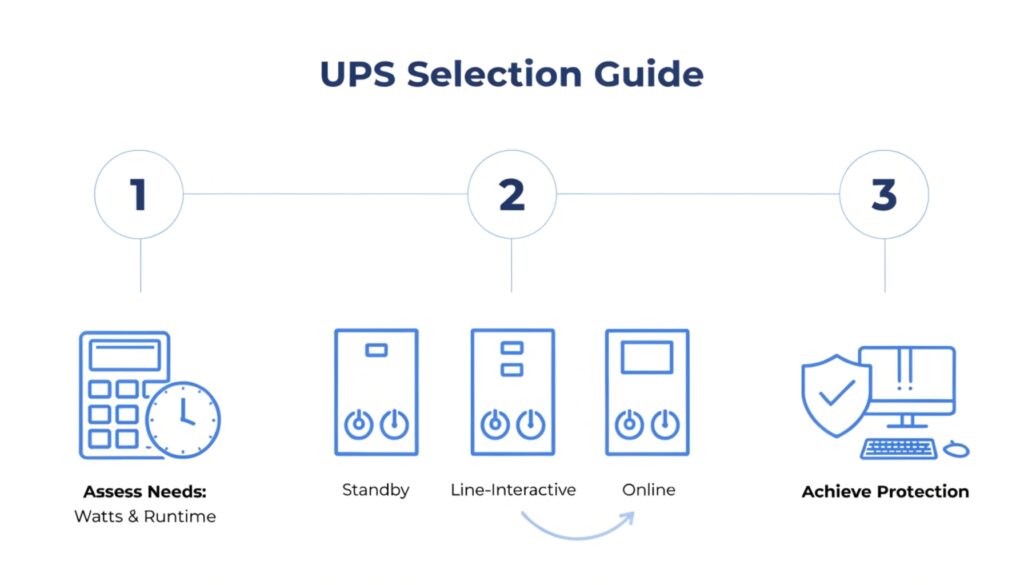
Follow these practical steps for UPS purchase and use:
-
Assess Your Needs
- Make equipment power list (watts/VA)
- Consider critical vs. non-critical devices
- Determine required runtime (5-30 minutes typical)
-
Select the Type
- Standby (basic protection) - $100-$300
- Line-interactive (better regulation) - $200-$800
- Online (maximum protection) - $500-$5000+
-
Install Properly
- Connect most important devices first
- Ensure adequate ventilation
- Follow manufacturer's load limits
-
Regular Maintenance
- Test batteries quarterly
- Replace batteries every 3-5 years
- Keep firmware/software updated
-
Responsible Usage
- Don't overload capacity
- Monitor battery indicators
- Plan for eventual replacement
How Does a Transformer Work in an Inverter or UPS System?
Many don't realize transformers play a crucial role in power protection systems. They're fundamental to voltage management.
The transformer in UPS systems adjusts voltage levels between components - stepping up or down as needed while isolating sensitive electronics from raw power fluctuations.
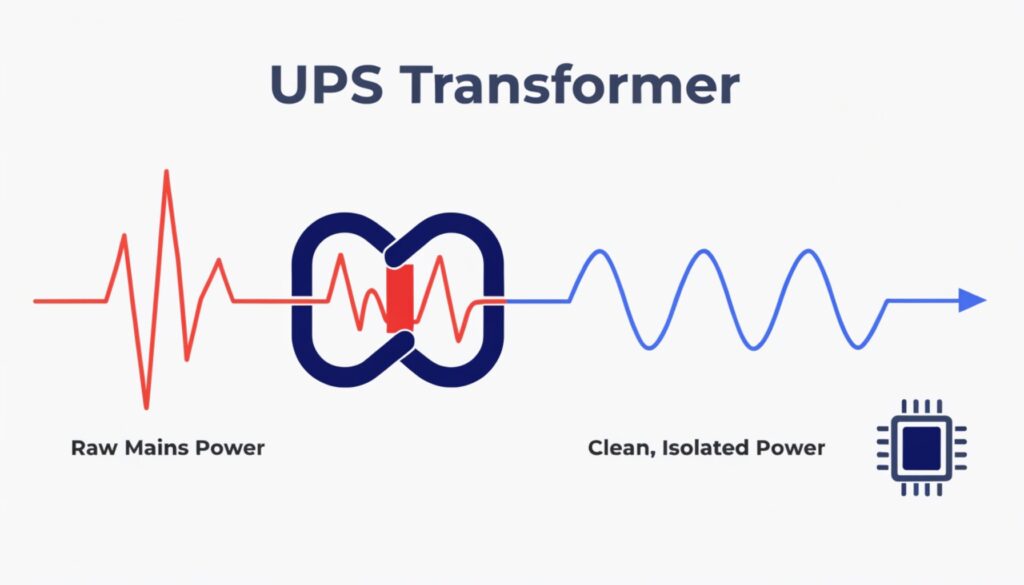
Transformers serve multiple critical functions:
| Function | How It Works | Importance |
|---|---|---|
| Voltage Conversion | Changes input/output levels | Matches device requirements |
| Isolation | Separates circuits electrically | Prevents noise/surge transmission |
| Regulation | Maintains stable output | Protects sensitive equipment |
| Impedance Matching | Optimizes power transfer | Improves efficiency |
In modern UPS designs:
- Standby UPS typically don't use transformers (lower cost)
- Line-interactive models incorporate automatic voltage regulation
- Online UPS constantly transform power through double conversion
- High-capacity units often use larger isolation transformers
What is the Function of UPS in a Power Plant?
Power plants need UPS systems just as much as offices and homes - for different but equally critical reasons.
In power plants, UPS systems maintain operation of control systems, safety mechanisms, and monitoring equipment during main power failures to prevent catastrophic failures and ensure orderly shutdowns.
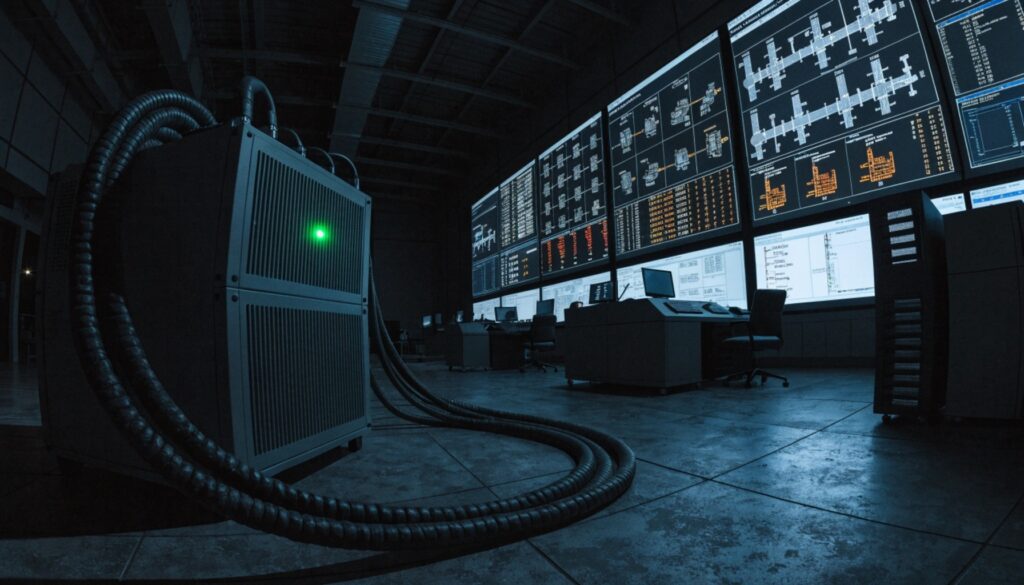
Critical power plant applications include:
-
Control Room Operations
- Keeps SCADA systems online
- Maintains operator visibility
- Preserves control capability
-
Safety Systems
- Emergency lighting
- Fire suppression systems
- Alarm systems
-
Turbine Controls
- Governing systems
- Lubrication pumps
- Cooling systems
-
Monitoring Equipment
- Radiation detectors
- Leak detection
- Pressure monitors
Industrial UPS systems in plants are typically:
- Large capacity (10kVA+)
- Designed for harsh environments
- Often redundant configurations
- With extended runtime capabilities
How Do UPS Systems Work and What Are Their Benefits?
UPS systems create an unseen safety net that most take for granted until they're needed.
UPS systems constantly monitor incoming power, provide instant battery backup during outages, condition unstable power, and filter electrical noise - offering comprehensive protection against multiple power problems.
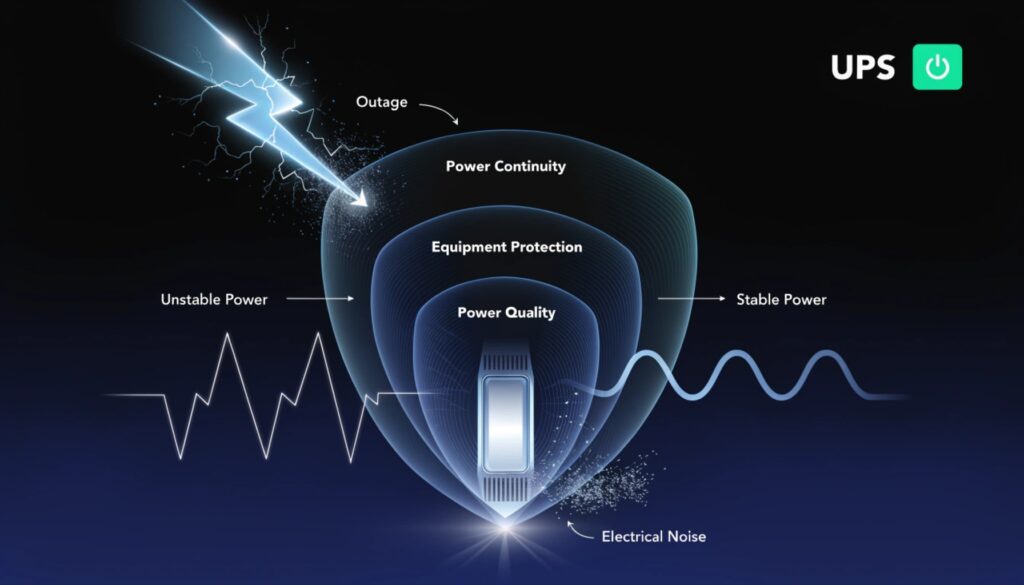
The complete benefits breakdown:
-
Power Continuity
- Prevents work interruption
- Maintains critical operations
- Avoids system reboots
-
Equipment Protection
- Reduces electrical stress
- Extends device lifespan
- Prevents data corruption
-
Power Quality
- Eliminates voltage sags/surges
- Filters line noise
- Provides clean output
-
Preventative Features
- Automated shutdowns
- Remote monitoring
- Battery management
Real-world impact examples:
- Hospitals keep life support running
- Data centers maintain uptime
- Retail stores continue transactions
- Homes prevent appliance damage
How Does a UPS Battery Backup Work?
The battery backup function is what separates UPS systems from simple surge protectors - it's active protection.
UPS batteries provide instant temporary power when main power fails - the system detects outages within milliseconds, switches to battery power automatically, and maintains voltage stability until normal power returns or systems shut down safely.
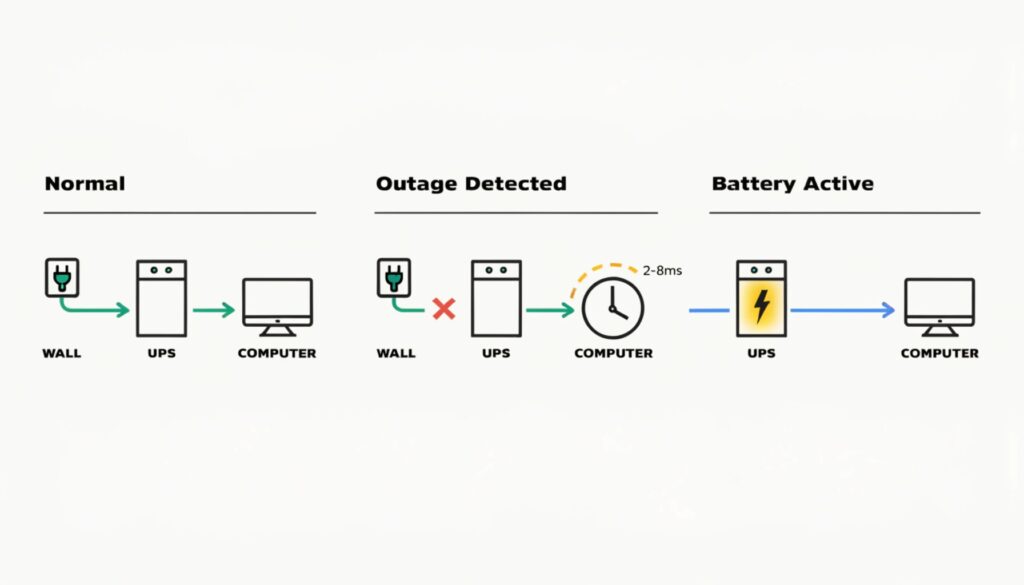
The battery backup process involves:
-
Standby Mode
- Batteries remain charged
- Power flows to devices
- Continuous monitoring
-
Event Detection
- Voltage drop recognized
- Switch to battery initiated
- Occurs in 2-8 milliseconds
-
Backup Power Phase
- Inverter activates
- DC converted to AC
- Connected devices stay on
-
Power Restoration
- Main power returns
- Automatic switchback
- Batteries recharge
Key battery considerations:
- Lead-acid vs. lithium-ion options
- Typical 3-5 year lifespan
- Replace with identical specs
- Environmental factors affect performance
Conclusion
UPS systems serve multifaceted roles - from basic home computer protection to critical industrial applications. Understanding their operation and benefits helps select and maintain the right solution for any power protection need.