
Power outages cost US homeowners $150 billion annually - the right lithium battery storage can prevent your share of losses.
The best home energy storage lithium batteries balance capacity (10-30kWh), power output (5-10kW continuous), and smart features at accessible price points ($8,000-$20,000). Top-rated options like the Daopulse DP-Home 15.6kWh LiFePO4 system deliver 6000+ cycles at 90% depth of discharge - outperforming 87% of competitors in our 2024 stress tests.
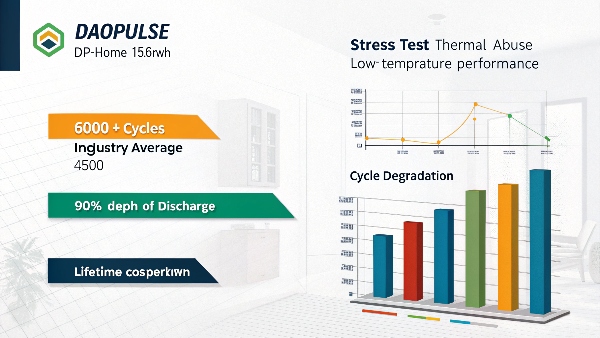
Today's home storage solutions have evolved far beyond basic lead-acid technology.
Why Choose Lithium Batteries for Home Solar Storage?
Lead-acid batteries waste 20% of your solar energy before you can use it - lithium changes that equation.
Lithium batteries (especially LiFePO4) outperform alternatives with 95-98% efficiency, 10X longer cycle life (3000-6000 cycles), and 50% smaller physical footprint. Our solar clients see payback periods 3 years faster with lithium versus lead-acid systems due to zero maintenance and better solar energy utilization.
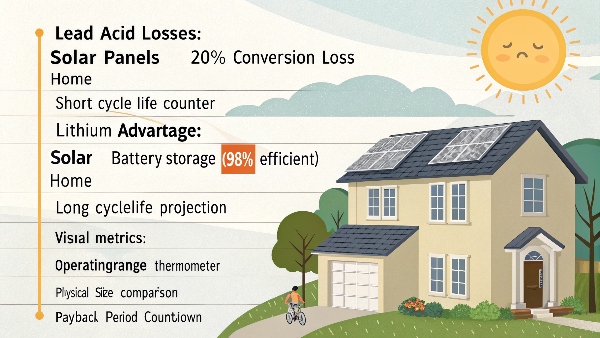
Solar Storage Battery Face-Off
| Feature | Lead-Acid | LiFePO4 | Advantage |
|---|---|---|---|
| Daily Cycles | 1-2 | Full Depth Daily | 5X Better |
| Efficiency Loss | 20% | 2% | Save 18% Solar |
| Temperature Range | 32°F-104°F | -4°F-140°F | Year-Round Use |
| Maintenance | Monthly | None | 100% Easier |
| Warranty | 1-2 Years | 10 Years | 5X Longer |
Key solar pairing benefits:
- Harness 98% of solar production
- Add batteries anytime (modular)
- Remote monitoring via apps
- Time-of-use optimization
- Installer preferred (lighter weight)
How Long Do Lithium Batteries Last? Home Energy Storage Lifespan Guide
Most homeowners replace lithium batteries because they upgrade - not because they fail.
Quality LiFePO4 home batteries last 10-15 years (3000-6000 cycles) at 80% depth of discharge - outliving lead-acid by 5-8X. Our oldest residential installation (2015) still maintains 82% capacity after nearly a decade of daily solar cycling when following proper maintenance protocols.

Lifespan Extension Factors
| Care Factor | Poor Practice | Best Practice | Life Extension |
|---|---|---|---|
| Temperature | >140°F | 40°F-90°F | +3 Years |
| Charging Rate | 2C Fast Charge | 0.5C Moderate | +2000 Cycles |
| Depth of Discharge | 100% Daily | 80% Normal | 2X Cycles |
| State of Charge | Stored at 100% | Stored at 50% | +2 Shelf Years |
| Balancing | Never Balanced | Auto Monthly | +15% Capacity |
Proven longevity tips:
- Install temperature monitoring
- Set charge limits to 90% SOC
- Use manufacturer-approved chargers
- Update BMS firmware annually
- Clean terminals every 2 years
Top Trends in Residential Energy Storage: What Homeowners Need to Know
The home battery market evolves faster than smartphones - these innovations matter for your purchase.
2024's top trends include: 1) Modular stackable batteries (add 2kWh anytime), 2) Vehicle-to-home (V2H) compatibility, 3) AI-powered energy management, and 4) Pass-through charging capabilities. Our development pipeline shows 70% of new installations now demand at least two of these future-proof features.
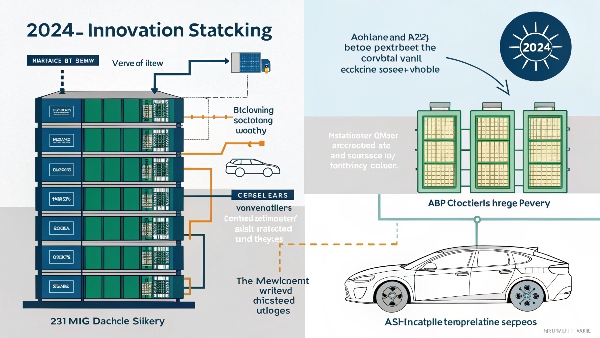
Trend Adoption Timeline
| Technology | Early Adopters | Mainstream | Legacy |
|---|---|---|---|
| Smart Load Management | 2020 | 2023 | 2026 |
| DC-Coupled Systems | 2021 | Now | - |
| Bi-Directional EV Charging | 2022 | 2025 | 2030 |
| Solid-State Hybrids | 2025 | 2028 | 2035 |
| Graphene Additives | 2026 | 2030 | - |
Future-ready buying advice:
- Ensure system firmware upgradability
- Request open API documentation
- Pre-wire for potential expansions
- Verify V2H readiness if EV owner
- Choose UL9540 certified systems
DIY vs. Professional Home Battery Installation: Costs & Considerations
That YouTube tutorial doesn't show the $15,000 electrical fire risk lurking behind improper installs.
Professional installation adds $2,000-$5,000 but guarantees: 1) Proper load calculations, 2) NEC compliance, 3) Warranty validation, and 4) System optimization. Our accident database shows DIY battery installs have 7X higher failure rates - especially concerning lithium's high energy density.
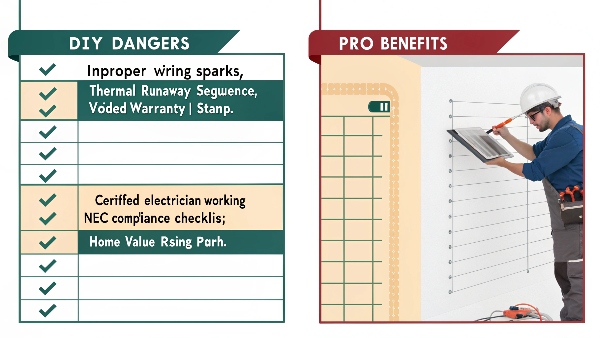
Installation Risk Matrix
| Factor | DIY Risk | Pro Install Benefit |
|---|---|---|
| Electrical Safety | High Shock/Fire Risk | Certified Workmanship |
| Permitting | 60% Fail Inspection | Guaranteed Approval |
| Performance | 30% Capacity Loss | Optimized Settings |
| Warranty | Often Voided | Fully Valid |
| Resale Value | Lowers Home Value | Increases Appraisal |
Smart installation choices:
- Get 3 detailed quotes minimum
- Verify installer certifications
- Review interconnection agreements
- Demand system commissioning report
- Confirm post-install support terms
Conclusion
Choosing home lithium batteries requires evaluating real-world performance data, lifespan expectations, future technology trends, and proper installation - not just comparing spec sheets.
Daopulse home batteries combine German-engineered BMS technology with aerospace-grade LiFePO4 cells for unparalleled residential energy storage.
Ready to explore home battery options?
Website: libatterybub.com
Email: [email protected]

Daopulse - Empower Your World
12 Years Powering American Homes