
You face constant pressure to reduce your company's carbon footprint and lower operational costs. But your critical systems need 24/7 power protection, and traditional UPS units are known for being energy hogs.
Yes, modern energy-efficient UPS options exist. Our systems use high-efficiency ECO modes, advanced lithium-ion batteries, and are compatible with renewable energy sources, significantly cutting your power consumption and supporting your green initiatives.
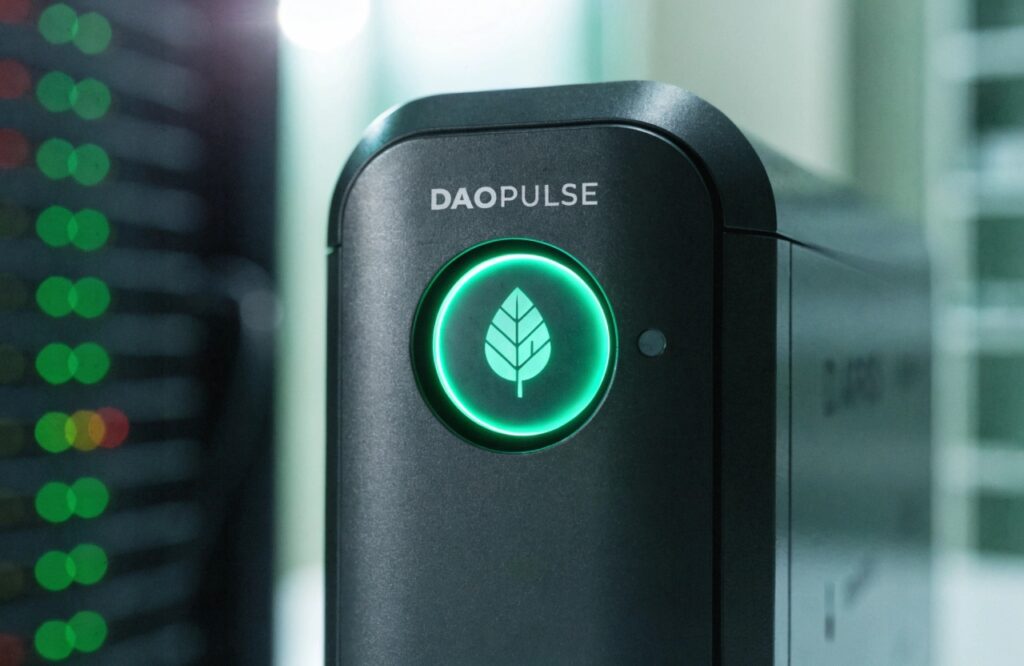
For years, procurement managers saw the UPS as a necessary evil—a power-hungry insurance policy. I've sat in meetings where the entire discussion was about balancing the cost of downtime against the high electricity bill of the protection system. But that's an outdated view. As an OEM/ODM manufacturer, we've invested heavily in R&D to solve this exact problem. Your power protection system can, and should, be a part of your sustainability strategy, not a liability. Let's explore how we make that possible for our partners.
How do our UPS systems extend battery life in demanding environments?
UPS batteries are a major operational expense and environmental concern. You worry that in a hot data center or a busy factory, they will fail quickly, causing unexpected costs and waste.
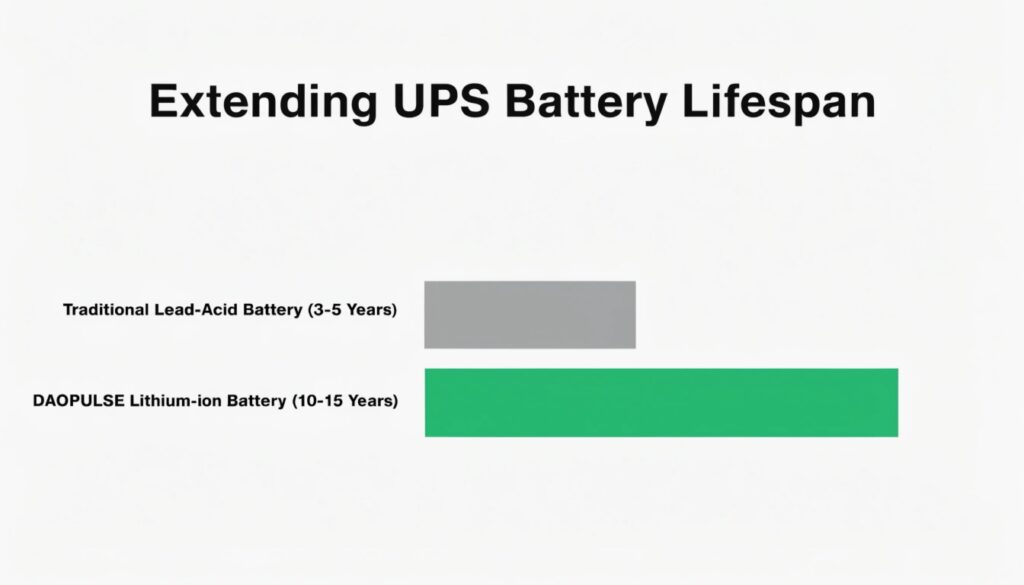
We extend battery life with smart charging technologies that prevent overcharging and through our advanced lithium-ion battery options. Lithium batteries last 2-3 times longer than traditional lead-acid, especially in demanding conditions, reducing replacements and waste.
Smarter Charging, Longer Life
A battery's worst enemy isn't just power outages; it's how it's treated every day. A common mistake I see is using a UPS with a constant "trickle charge." This continuously pushes a small amount of current into the battery, which can degrade it over time, like leaving a glass of water constantly overflowing. Our systems use a smarter method, often called Advanced Battery Management (ABM). It works in three stages: a fast initial charge, a steady top-off charge, and then it turns the charger off completely, letting the battery rest. It only re-engages the charger when needed. This simple change can increase battery life by up to 50%.
Furthermore, we are experts in lithium-ion UPS solutions. While lead-acid is a proven and cost-effective technology, lithium is a game-changer for green businesses. It’s not just about the longer lifespan. Lithium batteries are lighter, smaller, and more efficient at charging and discharging, which reduces wasted energy. For a system integrator planning a large-scale deployment, this means a lower total cost of ownership and a much smaller environmental footprint over the project's lifetime.
| Feature | Standard Trickle Charging | DAOPULSE Smart Charging (ABM) |
|---|---|---|
| Charging Method | Continuous low current | 3-stage charging with rest periods |
| Battery Stress | High (constant overcharging) | Low (prevents degradation) |
| Typical Lifespan | 3-5 Years (Lead-Acid) | 4-6 Years (Lead-Acid), 10-15 Years (Lithium) |
| Best For | Basic, low-cost applications | Critical systems, green initiatives |
Are DAOPULSE UPS systems compatible with renewable energy sources like solar panels?
You want to power your facility with solar energy, but you know its output is intermittent. You cannot risk connecting your million-dollar servers or critical medical equipment to such an unstable source.
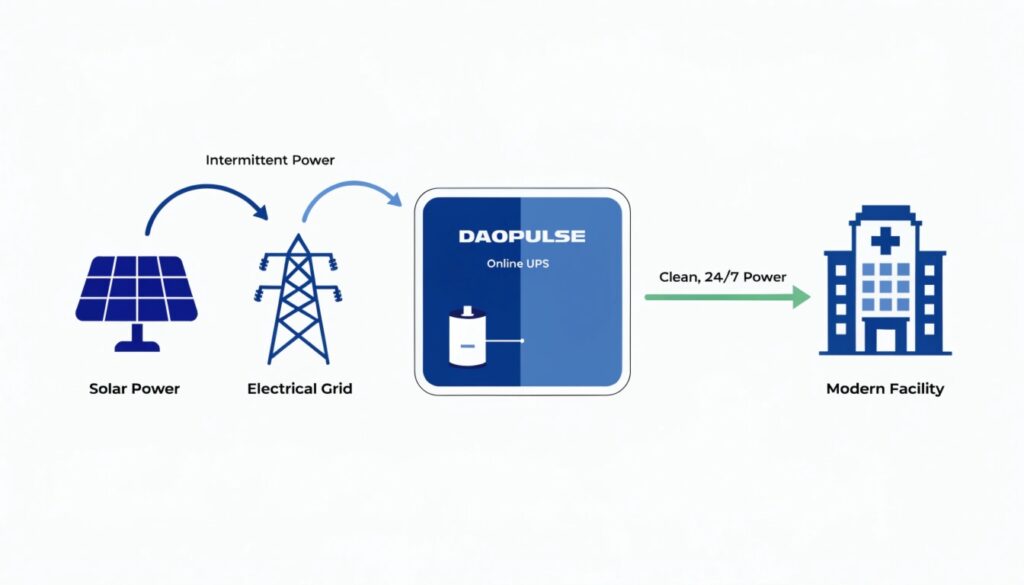
Yes, our UPS systems are essential for making renewable energy viable for critical applications. They act as a power conditioner and energy buffer, storing excess solar power and delivering a perfectly stable output, 24/7.
The Bridge Between Green Energy and Critical Loads
I often explain to system integrators that our UPS is the missing link that makes renewables practical for their clients. A solar panel's output fluctuates with every passing cloud. No procurement manager for a hospital or data center would ever connect their systems directly to that. This is where our online UPS systems come in. The UPS is designed to take in imperfect power—whether from the grid or a solar array—and perfect it.
It works like this: the energy from the solar panels is fed into our UPS. The UPS converts it to clean DC power, using any excess to charge its batteries. It then regenerates a completely new, stable AC sine wave to power your critical equipment. When the sun goes down or behind a cloud, the UPS instantly and seamlessly continues to supply power from its batteries. The critical load never experiences an interruption. This setup not only supports your sustainability goals but also increases your energy resilience. You're less dependent on the grid and have a stored energy reserve ready for any outage, renewable or otherwise. It's a key strategy for building truly green and resilient infrastructure.
What is the typical delivery time for ordering a UPS from Newark?
Your project is on a tight schedule. You've found our products on a distributor site like Newark, but you have no visibility into stock levels or lead times, putting your project timeline at risk.
For standard models on Newark, delivery depends on their inventory. For larger or customized projects, you work directly with us, your OEM/ODM partner, to establish a production and delivery schedule that aligns perfectly with your timeline.
Two Paths for Your Procurement Needs
This is a practical question I help procurement managers navigate all the time. There are two main ways to acquire our products, and the best one depends on your needs.
-
Distributor Channel (e.g., Newark): When you order one or a few standard units from a major distributor, you are buying from their stock. They purchase from us in bulk and handle their own logistics. Delivery times can be very fast if the item is in their local warehouse, but it is subject to their inventory levels. This path is perfect for small-scale needs or urgent replacements of common models.
-
Direct OEM/ODM Partnership: When you are a system integrator or a large enterprise planning a significant project, you work directly with my team at DAOPULSE. This is our core business. In this scenario, we don't just sell you a product; we plan with you. We agree on specifications, production runs, and a delivery schedule that fits your project's phases. This gives you complete transparency and ensures that the right customized equipment arrives exactly when you need it, anywhere in the world.
| Procurement Path | Best For | Lead Time Control | Customization |
|---|---|---|---|
| Distributor (e.g., Newark) | Small quantities, standard models | Depends on distributor stock | Low |
| Direct OEM/ODM (DAOPULSE) | Large projects, system integrators | High (Scheduled with production) | High (Full customization) |
Conclusion
Energy-efficient UPS options are not just available; they are essential for modern green businesses. With smart battery management, high-efficiency modes, and seamless renewable energy integration, we provide power solutions that protect both your equipment and your bottom line.