
You see terms like Standby, Line-Interactive, and Online, but they're confusing. Choosing the wrong UPS means you either overpay for protection you don't need or leave critical equipment vulnerable.
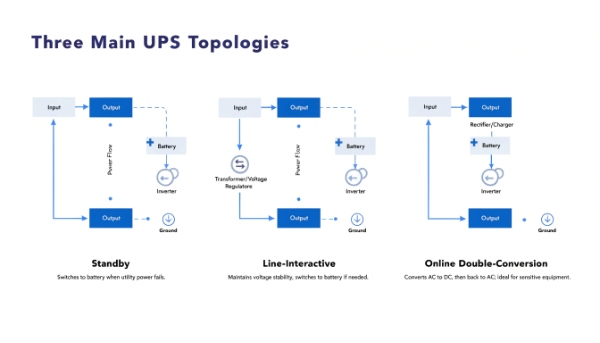
There are three main types of UPS: Standby (Offline), Line-Interactive, and Online (Double-Conversion). Each offers a different level of power protection, designed for equipment ranging from basic PCs to critical data centers.
In my ten years as a UPS manufacturer, I’ve seen many clients struggle with these terms. People often think a UPS is just a battery box, but it's much more. A UPS is a guardian for your electronics. It provides stable, reliable power support, which is essential in environments with unstable electricity. It protects against high voltage, low voltage, surges, and even lightning strikes. For the precision instruments used in hospitals and data centers, a UPS is the best protector. Before we compare the different types, let's start with the basics.
What is a UPS system?
Power flickers and your computer reboots, losing important work. These small power problems can also slowly damage sensitive electronics over time, leading to expensive and unexpected failures.
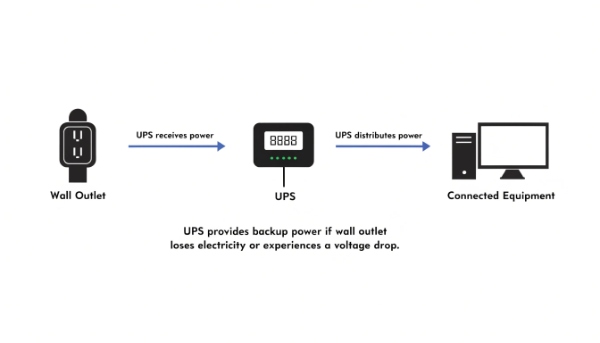
A UPS, or Uninterruptible Power Supply, is a device that provides instant emergency power to your equipment when the main power source fails. It uses an internal battery to keep things running smoothly.
More Than Just a Battery
A UPS is much more than a simple battery backup. Its role is to be a gatekeeper for the power that reaches your valuable equipment. I explain its two primary jobs to clients like this:
1. Backup Power
This is the most obvious job. When the main power from the wall cuts out, even for a millisecond, the UPS battery takes over instantly. For a procurement manager like Mr. Li, whose company provides hospital infrastructure, this is not a luxury; it is a necessity. A power interruption to a medical device or a server can have serious consequences. The UPS creates a bridge of power, giving you time to shut down safely or allowing a backup generator to start.
2. Power Conditioning
This is the job many people forget. The power coming from your wall outlet is not always clean. It can have small surges, dips (sags), and electrical "noise." This "dirty" power slowly damages sensitive electronic components. A good UPS cleans and conditions this power before it reaches your devices. It absorbs surges and corrects voltage levels, acting like a shield. This is why precision instruments that need high-quality power rely on UPS systems to function correctly and have a long service life.
What is the purpose of a UPS (uninterruptible power supply)?
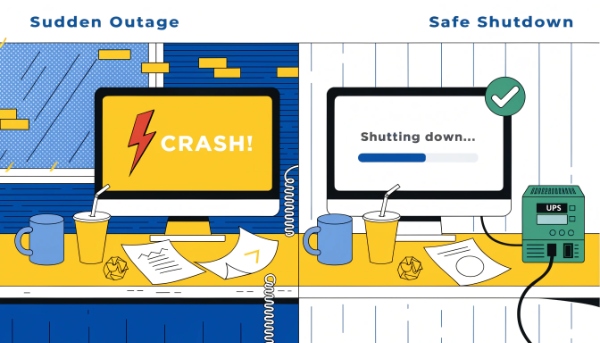
A sudden power outage hits your office. Without warning, your systems crash instantly. This can corrupt important data, damage hardware, and bring your business operations to a complete stop.
The main purpose of a UPS is to provide a clean, stable stream of power during outages. This allows for a safe and orderly shutdown of equipment or continued operation until main power is restored.
The Three Pillars of Protection
When clients ask me why they need a UPS, I focus on three key purposes that are critical for any business that relies on electronics. These are the core reasons why a UPS is a smart investment.
1. Preventing Data Loss and Corruption
Imagine you are saving a large file or running a database transaction when the power cuts out. The process is interrupted, and the file can become corrupted and unusable. A UPS gives you a crucial window of time—from a few minutes to a few hours—to save everything you are working on and shut down the system properly. This prevents data loss.
2. Protecting Hardware from Damage
Dirty power is a silent killer of electronics. Power surges, spikes, and brownouts put stress on delicate components like power supplies and motherboards. A UPS regulates this power, protecting your hardware from these damaging events. This extends the life of your computers, servers, and other equipment, saving you money on repairs and replacements.
3. Ensuring Business Continuity
For many businesses, downtime is not an option. A bank cannot afford for its transaction servers to go offline. A hospital needs its critical systems running 24/7. A UPS ensures that these essential operations can continue without interruption during short power outages. For longer outages, it keeps things running until a generator takes over.
How do UPS systems work and what are their benefits?
You know a UPS is supposed to help, but you don't really know how. Not understanding the mechanics makes it hard to trust that your expensive equipment is actually safe from all power problems.
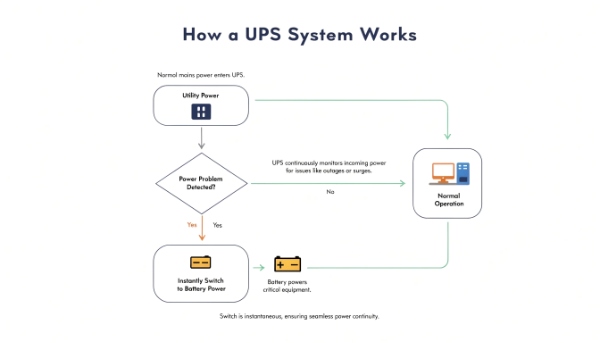
A UPS works by constantly monitoring incoming utility power. When it detects a problem, it instantly switches to its internal battery to supply clean energy. The main benefits are zero downtime and protection from power irregularities.
The Inner Workings of a Power Guardian
At its heart, a UPS is a clever combination of three main parts working together. The way these parts interact defines the type of UPS, which we will discuss next.
- The Rectifier/Charger: This part takes the incoming AC power from the wall and converts it to DC power. It uses this DC power to charge the battery.
- The Battery: This is the core of the UPS. It stores the DC power, ready to be used the moment it's needed. We offer both lead-acid and lithium battery solutions to meet different needs.
- The Inverter: When the power fails, the inverter takes the DC power from the battery and converts it back into clean AC power for your equipment to use.
The primary benefits you get from this process are clear:
- Instant Power Backup: The switch to battery power is so fast—measured in milliseconds—that your connected devices don't even notice the power was lost.
- Voltage Regulation: The UPS ensures the voltage going to your equipment stays within a safe range, protecting it from sags and swells.
- Surge Protection: It acts as a high-grade surge protector, absorbing sudden voltage spikes from events like lightning strikes.
What are the different types of UPS systems?
You need to buy a UPS, but the choices are overwhelming. Picking the wrong type could mean you've wasted money on protection you don't need, or even worse, you don't have enough protection.
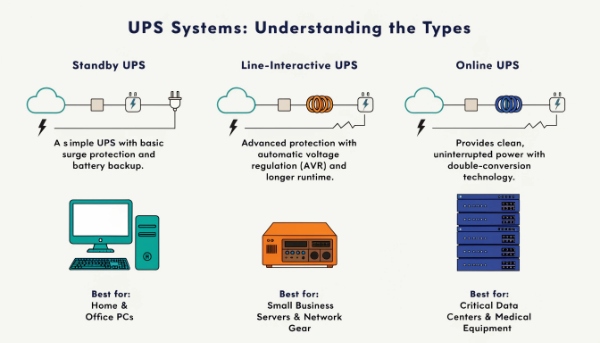
The right UPS depends on your equipment. Use Standby for PCs, Line-Interactive for small servers and network gear, and Online Double-Conversion for critical systems like data centers and medical equipment.
Choosing the Right Level of Protection
This is the most important decision you will make. As an OEM manufacturer, we create all three types because they serve different needs. The best way to understand the difference is to see them side-by-side.
| Feature | Standby (Offline) | Line-Interactive | Online (Double-Conversion) |
|---|---|---|---|
| How it Works | Sits idle until power fails, then switches to battery. | Corrects minor power fluctuations without using the battery. | Constantly recreates power from the battery, completely isolating equipment. |
| Protection Level | Basic | Good | Best |
| Transfer Time | Small delay (a few ms) | Very small delay | Zero |
| Cost | $ | $$ | $$$ |
| Best For | Home PCs, non-critical workstations | Small business servers, network equipment | Data centers, medical equipment, critical servers, precision instruments |
The Standby UPS is the most basic. It's affordable and great for a home office PC. The Line-Interactive UPS is the middle ground. It actively regulates voltage, which is better for business servers. The Online Double-Conversion UPS is the ultimate protector. It constantly rebuilds the power supply from the battery, meaning your equipment is completely isolated from the raw utility power. There is zero transfer time. This is the only choice for critical applications where even a millisecond of bad power is unacceptable.
Conclusion
A UPS is essential for protecting equipment. Understanding its purpose, how it works, and the three main types helps you choose the right system to ensure stable, reliable power.